April 27, 2026
What is bog oak and why is it so rare?
Wood older than the pyramids, recovered from rivers and peat bogs. We explain what bog oak is, how it forms, and why it ranks among the rarest raw materials on earth.
Wood from the river bed
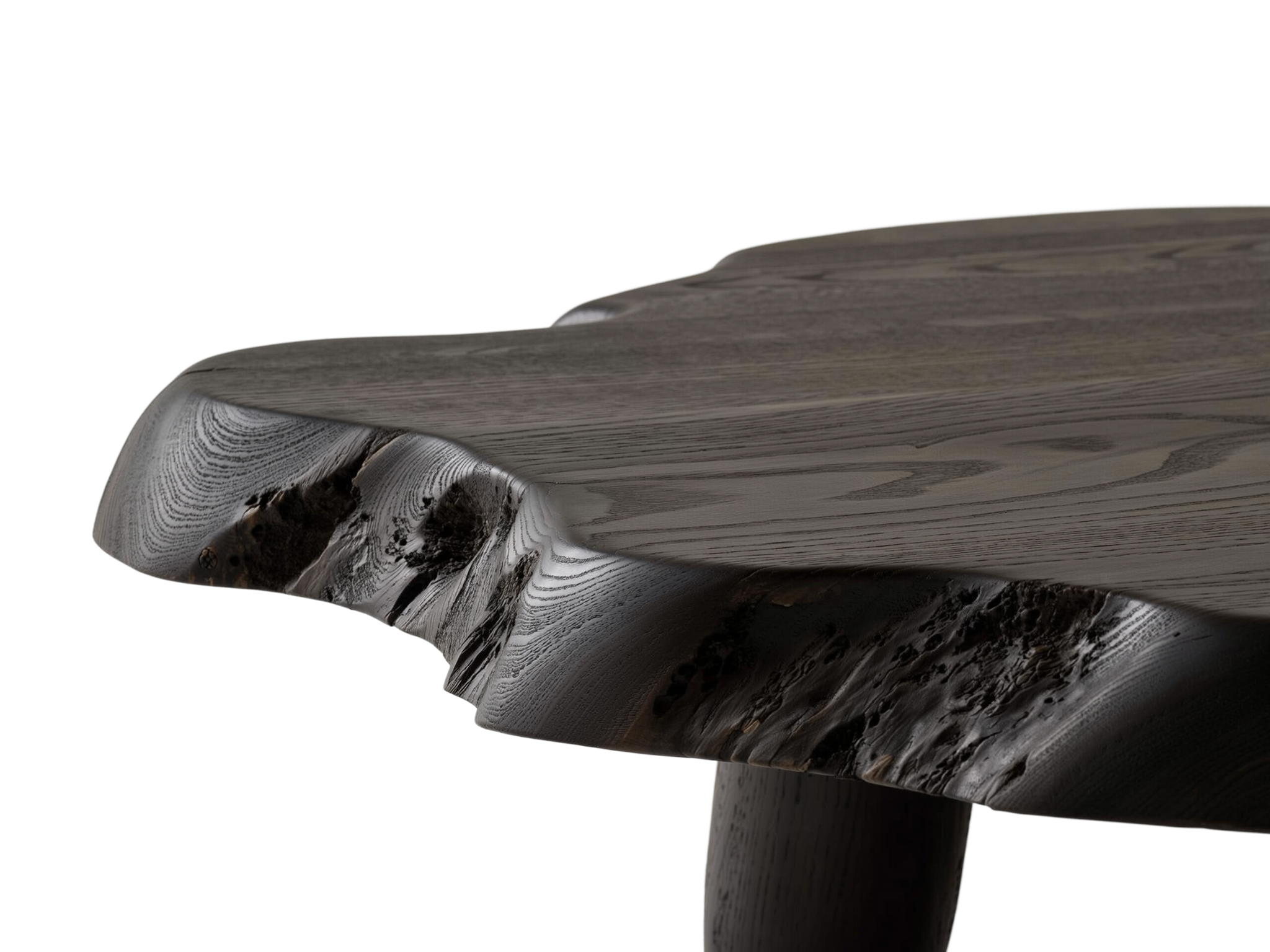
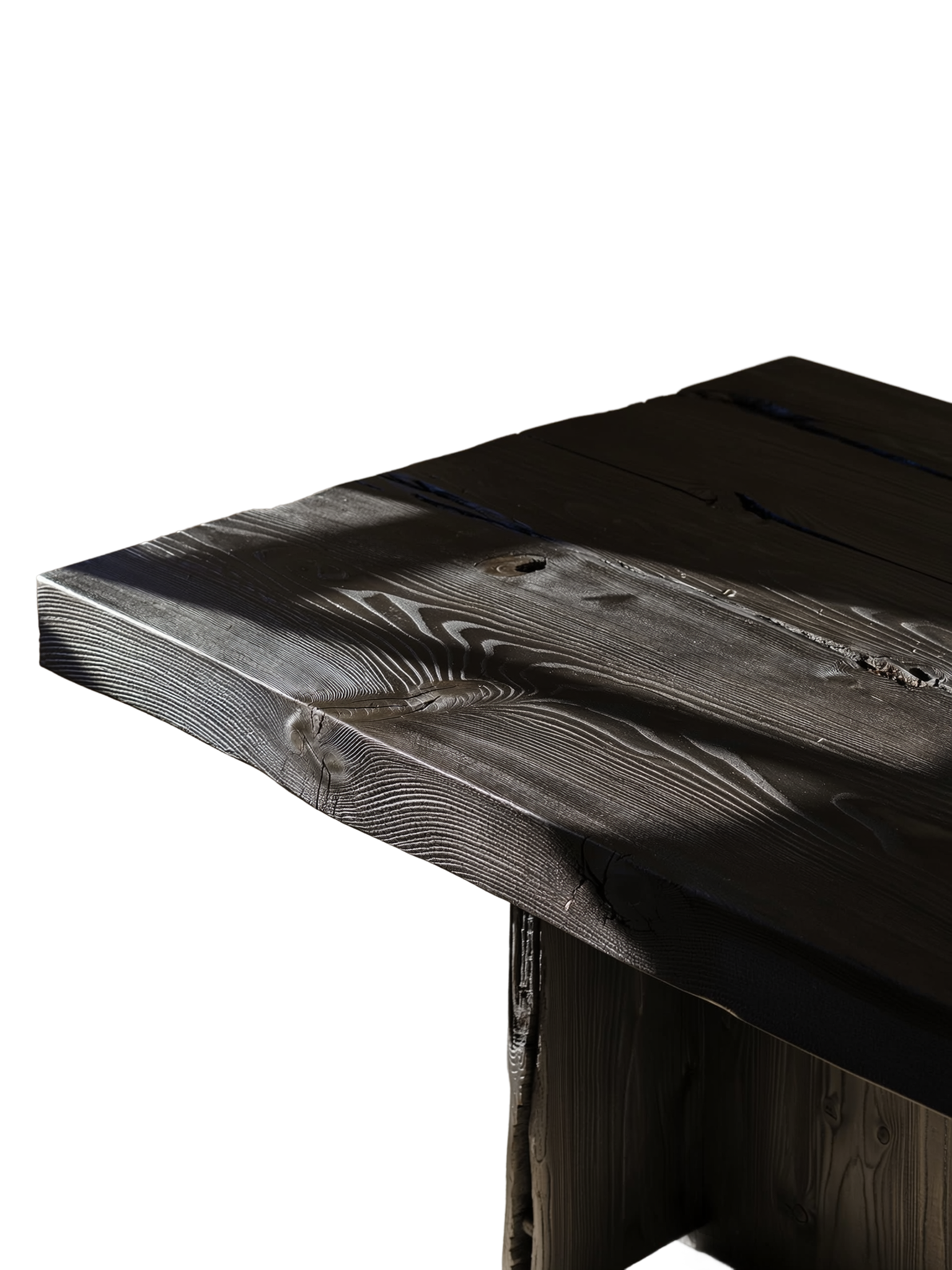
Bog oak is not a species name, it is a state. It forms from common pedunculate oak that fell into water and stayed there for hundreds or thousands of years. Buried under a layer of silt, with no access to oxygen, the wood undergoes a slow process of mineralization. Tannins from the oak react with iron dissolved in the water. With every passing century the wood grows darker. After several thousand years it reaches a colour ranging from deep brown to an almost ink-black hue.
In English it is known as bog oak. In Polish you also hear "fossil oak" or "morta". Whatever the name, it refers to the same material. Wood from a time when humans were only just learning to farm.
How bog oak forms
The process starts with a disaster. A flood, a landslide, a shifting river bed. The tree ends up in the water and stays there for good. A layer of sediment cuts off oxygen. Ordinary wood rots within a few years in such conditions. Oak behaves differently.
The tannins in its structure protect the fibres from bacteria. At the same time they react with minerals from the water. The most important compounds are iron salts, which give the wood its characteristic dark colour. The more iron in the environment and the longer the wood lies there, the darker the shade.
The youngest pieces are around 1,700 to 2,000 years old. The oldest, found in the peat bogs of Poland and the United Kingdom, reach 8,000 to 10,000 years. That is the time when the first settlements were rising in Mesopotamia and humans were only beginning to cultivate grain.
Where it is found
Bog oak occurs mainly in Europe. The principal extraction sites are Poland, Ireland, England, Germany and the Baltic states. In Poland most finds come from the valleys of the Vistula, Oder, Warta and their tributaries. The wood reaches the surface by chance, during river dredging, road works or gravel pit operations.
Every find is unique. The trees grew in different conditions, lay in water of varying quality, and sometimes come from completely different eras. Two trunks pulled from the riverbed a kilometre apart can differ in age by several thousand years.
Radiocarbon dating (C14)
The age of the wood cannot be determined by visual inspection. The C14 method is used, which analyses radioactive carbon. Every living organism takes in a fixed proportion of carbon isotopes. After death, that proportion changes at a steady rate. By measuring the current ratio you can calculate when the organism was alive.
For bog oak, a sample is taken from each log and sent to an accredited laboratory. The result gives the age with an accuracy of a few decades. The client receives a certificate with the date, the extraction location and the laboratory's stamp.
It is the only way to reliably confirm authenticity. Without a C14 certificate, real bog oak cannot be distinguished from ordinary oak coloured with dark stain.
Why it is so rare
Bog oak deposits cannot be replenished. It is a fossil resource and its supply is finite. Estimated quantities of wood suitable for processing are smaller than the world's diamond reserves. For comparison, around 130 million carats of diamonds are mined every year. Bog oak, measured in cubic metres, is significantly scarcer.
On top of that comes the processing. Wood pulled from the water contains huge amounts of moisture and minerals. Before it reaches the workshop, it has to dry for 7 to 10 years under controlled conditions. Drying too fast causes cracks. Drying too slowly risks renewed decay.
Hand-finishing a single piece of furniture takes from four to seven weeks. Sanding a single board alone averages 35 hours of precise work.
Applications
Bog oak is most often found in premium furniture. Dining tables, desks, bar tops, museum exhibits. It increasingly appears in musical instruments. Violins, guitars, fingerboards. The acoustic stability of wood several thousand years old is an unmatched standard for luthiers.
In architectural carpentry it is used for wall panels in prestigious interiors. Hotels, law firms, executive offices. Anywhere the history of the material matters as much as its appearance.
Bog oak in your home
Every table from our workshop has its own story, confirmed by a document. A serial number, a C14 certificate, an entry in the Book of Tables. This is not just furniture, it is an artefact. Wood that grew when humanity was inventing writing. Now it can stand in your dining room.
Konrad Wojtusiak
CEO Oriolus Woodcraft
About Oriolus Woodcraft — tables made of black oak combining craftsmanship and emotion. Brand creator with a passion for author-driven design and authenticity.
Did you like the article? Share it